Treatments for Sleep Apnea

The treatment for this condition depends on the severity of the disorder and what suits you best. After diagnosis and careful evaluation, the treatment is prescribed. Some of the treatment options are described below.
Continuous Positive Airway Pressure (CPAP)
It is the most common treatment for obstructive sleep apnea. The machine used in this treatment, CPAP machine delivers a regular stream of air within a mask, helping the airways stay open during sleep.
Bi-level Positive Airway Pressure (BiPAP)
The BiPAP machine works on a similar principle of CPAP. But in addition, it allows the user to adjust pressure levels, maintaining higher pressure during inhalation and lower pressure during exhalation.
Adaptive Servo-Ventilation (ASV)
Working on the same principle as CPAP, it additionally adjusts a patient’s breathing patterns and provides support when needed. It is more commonly used in central sleep apnea.
Oral Appliances
Mandibular Advancement Devices (MADs)
Devices resembling mouthguards, they are minimally invasive and easier to wear while sleeping. They tend to reposition the lower jaw (mandible) along with the tongue and help keep the airway open during sleep. This is our field of expertise at Great Sleep Dental!
Mechanism of MAD therapy
MAD prevents the collapse of tongue and soft tissues at the back of the throat that leads to narrowing of airways and obstructive breathing. It advances the lower jaw slightly forward to reposition it towards a more open airway.
Types of MAD
Prefabricated Devices
These are available pre-made over-the-counter or online. These are adjustable and suitable for mild to moderate sleep apnea. Many of our patients opt to try this first and then reach out to us for a custom-made and longer lasting appliance. Another thing to remember if you try a prefabricated appliance is that you will not have the oversight and guidance of a qualified dentist to help you through adjustments of the device and any side effects you may experience.
Custom-Made Devices
Custom fitted by a dentist or healthcare professionals, they are specifically designed and made for a specific patient. Their impression of teeth, jaws and molars are taken, and devices are designed according to an individual patient’s anatomy. Did you know there are over 160 different FDA cleared appliances on the market? Dr. Bagdonas can discuss the different types and offer recommendations on what may work best for you.
Effectiveness of MAD
Mandibular advancement devices can be very effective. One of the best things this treatment has going for it is how easy it is to use. What your individual response is to the treatment can vary, and that is why it is so important to stay connected with us and your medical team. Adjustments are often needed to get the most out of your device. Oftentimes, a follow-up sleep study while wearing the device is recommended to evaluate how it is working for you. Mandibular advancement devices are FDA approved for mild and moderate obstructive sleep apnea, as well as severe cases if you cannot tolerate CPAP.
Hypoglossal Nerve Stimulation (HNS)
We have many patients asking us about “Inspire” after seeing their advertisements. “Inspire” is a surgically placed implant that stimulates the hypoglossal nerve. The hypoglossal nerve controls the movement of the tongue, and its stimulation aims to prevent airway collapse during sleep.
How does it work?
- Implantation: A small device is surgically implanted under the skin in the chest area. This device is connected to a lead that stimulates the hypoglossal nerve.
- Detection: The device monitors the individual’s breathing patterns during sleep. When it detects signs of airway obstruction, it sends a signal to stimulate the hypoglossal nerve.
- Stimulation: The stimulation causes the muscles of the tongue and other upper airway muscles to contract, helping to keep the airway open and allowing normal breathing to resume.
Other Surgical Approaches to Manage OSA
Sometimes, a surgical approach can be the right option for you. One treatment is called a maxillo-mandibular advancement. This procedure is typically done by an oral surgeon and involves surgically moving both the upper jaw and lower jaw forward. It also involves orthodontics to bring your teeth into proper alignment in the new jaw position.. Mandibular advancement devices can actually help determine if you may be a good responder for this treatment because it simulates the same movement. There are also soft tissue surgical approaches such as UPPP which are usually performed by an ENT.
Myofunctional Therapy
Myofunctional therapy is a specialized form of therapy aimed at treating disorders related to the muscles and functions of the face and mouth. It primarily focuses on correcting improper muscle functions and habits that can affect oral and facial development, swallowing patterns, and speech.
The therapy typically involves exercises and techniques designed to improve muscle strength, coordination, and posture in the oral and facial muscles. It may also address issues such as tongue thrust, mouth breathing, incorrect swallowing patterns, and improper resting tongue position. Myofunctional therapy can reduce snoring and sleep disordered breathing in some cases.
Weight Loss & Positional Therapy Can Also Help with OSA
Excess weight, especially around the neck and throat area, can contribute to airway obstruction during sleep. Fat deposits in the upper airway can narrow the air passage, making it more prone to collapse during sleep.
This is a tricky aspect of managing OSA – it is hard to have healthy lifestyle habits if you are exhausted and not getting adequate sleep! Studies have shown that even modest weight loss can lead to improvements in sleep apnea severity and symptoms. In some cases, significant weight loss may even lead to complete resolution of sleep apnea.
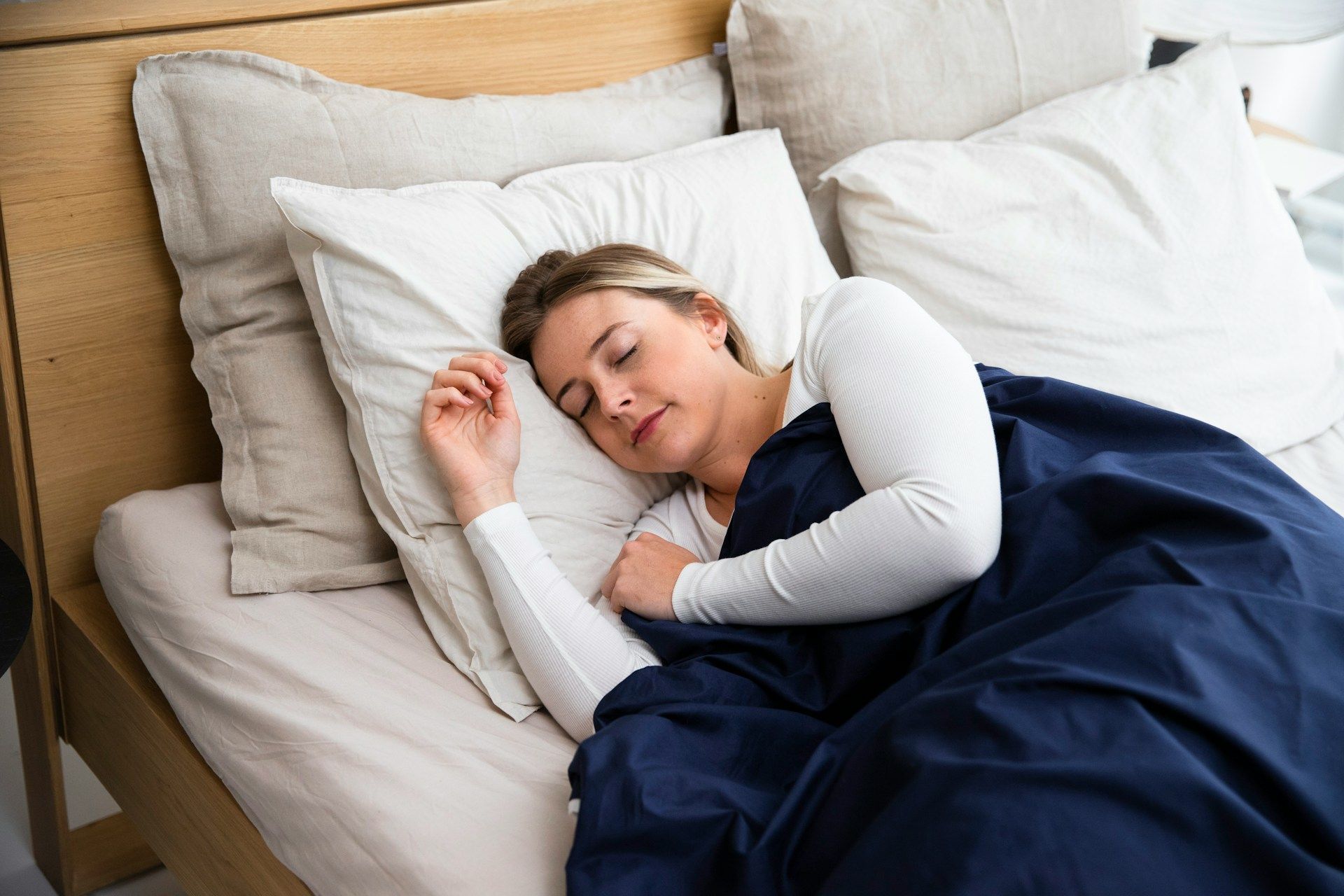
Positional therapy involves training the individual to sleep in a position that minimizes airway obstruction. For many people with OSA, the obstruction is more pronounced when sleeping on their back (supine position) compared to sleeping on their side. Using positional aids such as special pillows, positional alarms, or wearable devices can help encourage side sleeping and discourage sleeping on the back.
Regardless of which treatment option is right for you, weight loss and positioning are usually a helpful adjunct to getting the best result.
Please reach out today for a consultation if you are interested in discussing what treatment option may be right for you!